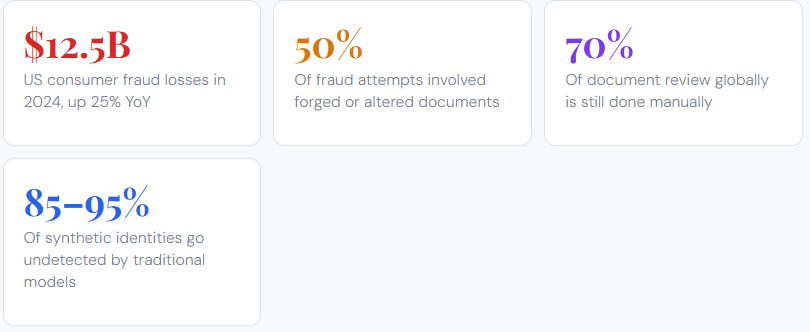
Document fraud is no longer a niche risk, it has become a mainstream financial threat. Half of all fraud attempts in 2024 involved forged or altered documents and most of them passed through standard OCR pipelines without being detected.
OCR Trust Gap
OCR answers one question: what does this document say? Fraud detection demands a different question: should we trust it? No matter how accurate the text extraction, it cannot tell you whether the pixels have been tampered with, whether the metadata matches the claimed origin, or whether the income figure on a pay stub holds up against the bank statement in the same application package.
That gap is the attack surface and generative AI has made it effortless to exploit.
Where Fraud Focuses
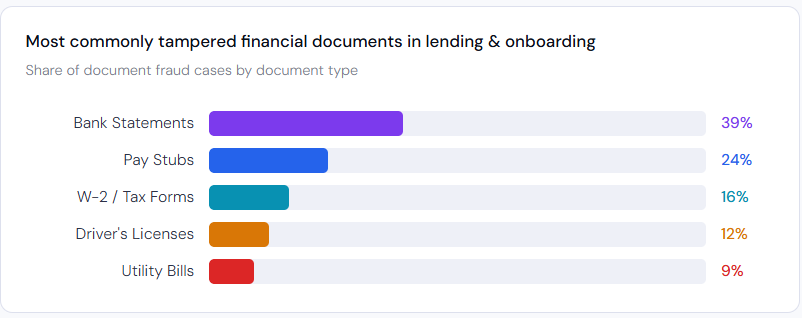
Fraudsters tend to focus on a small number of high value document types especially those that are central to onboarding and underwriting workflows because these documents offer the biggest opportunity for financial gain.
Effortless Fraud, Outsized Impact
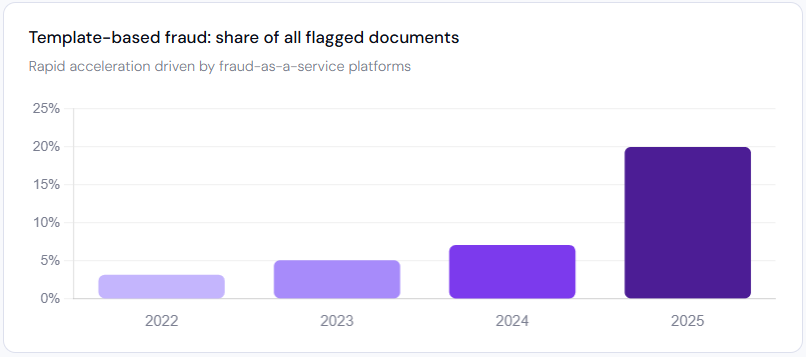
Platforms like OnlyFake now make it easy to create convincing government IDs for as little as 15 dollars while editable bank statement templates can be bought for under 10 dollars making fraud both cheap and accessible. At the same time AI generated document fraud has surged growing by 300 percent between 2022 and 2024 and template based fraud has evolved from just 3 percent of flagged documents to 1 in 5 by the end of 2025 showing how quickly these tactics are scaling and becoming more common.
Humans Can't Keep Up Either
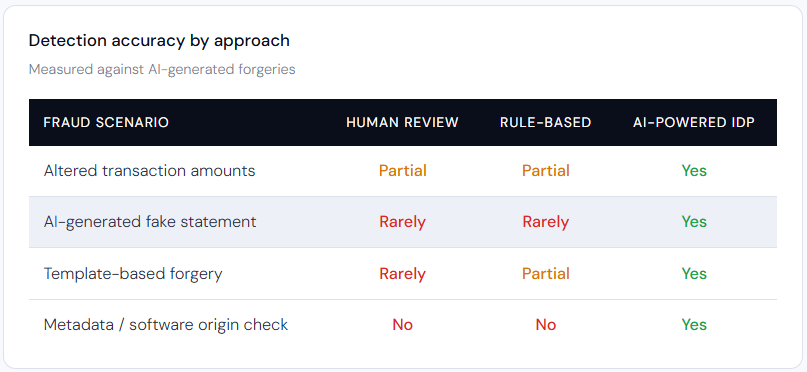
Adding more manual reviewers does not solve the problem. On average, human reviewers spend around 10 minutes per document and still miss sophisticated forgeries that pass visual inspection. AI-generated statements, template-based fraud, and metadata manipulation are often invisible to the naked eye. Detecting these patterns consistently requires AI-powered, multi-layered document intelligence that goes beyond what manual review can achieve.
What the Enterprise Is Doing About It
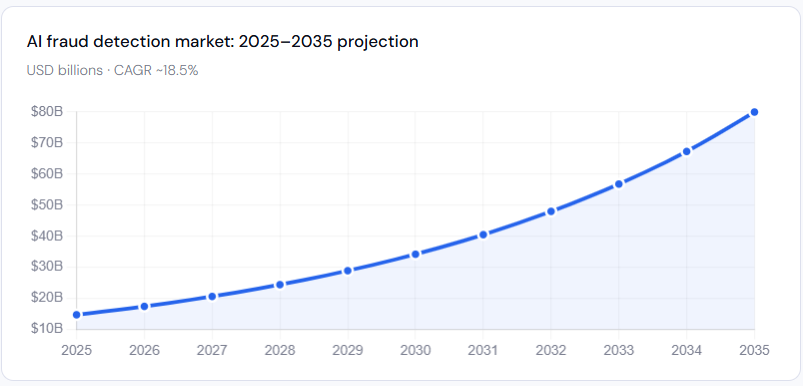
AI-driven fraud detection is rapidly transitioning from experimentation to broad adoption. This accelerating adoption is reflected in market growth, projected to expand from $14.7 billion in 2025 to over $80 billion by 2035. The impact is already significant, AI is expected to prevent approximately $25.5 billion in fraud losses in 2025 alone, reinforcing its role as a critical layer of defense in modern financial systems.
We take this a step further by analyzing documents across multiple layers simultaneously, including pixel level forensics, metadata validation, cross document consistency checks, and structured data extraction. By bringing these capabilities into a single unified workflow, we eliminate the need for separate fraud review queues and manual handoffs, making the entire process faster, more reliable, and easier to scale.
Clox Beyond OCR
At Clox AI, we believe a multi-layered approach is fundamental to tackling modern fraud, which now extends far beyond simple text manipulation to include pixel-level tampering, reused templates, and AI-generated artifacts. Rather than just extracting information, our focus is on enabling real-time decision-making,analyzing each document within seconds, automatically identifying risks, and triggering appropriate actions without manual intervention.
Detect tampering inconsistencies and hidden risks in seconds not minutes.