CLOX.AI
Blog

Blog

Insights, stories, and perspectives from our team

All articles

11 articles published

EXIF Data vs. Fraud: What Image Metadata Really Tells You

EXIF Data vs. Fraud: What Image Metadata Really Tells You

EXIF data reveals hidden details such as timestamps, device information, and editing history, making it a valuable tool for detecting image fraud. However, it can be altered, removed, or missing, especially in processed or AI-generated images. Therefore, reliable fraud detection requires combining metadata analysis with deeper pixel-level forensics.

Read more

Shadow Layers in PDFs: The Hidden Data That Exposes Document Manipulation

Shadow Layers in PDFs: The Hidden Data That Exposes Document Manipulation

PDFs store edits as layers, keeping original data hidden beneath visible content. These hidden traces help forensic tools detect manipulation. Humans see only the final version, but the full edit history reveals fraud.

Read more
Forensic Signs of an AI-Altered Bank Statement

Forensic Signs of an AI-Altered Bank Statement

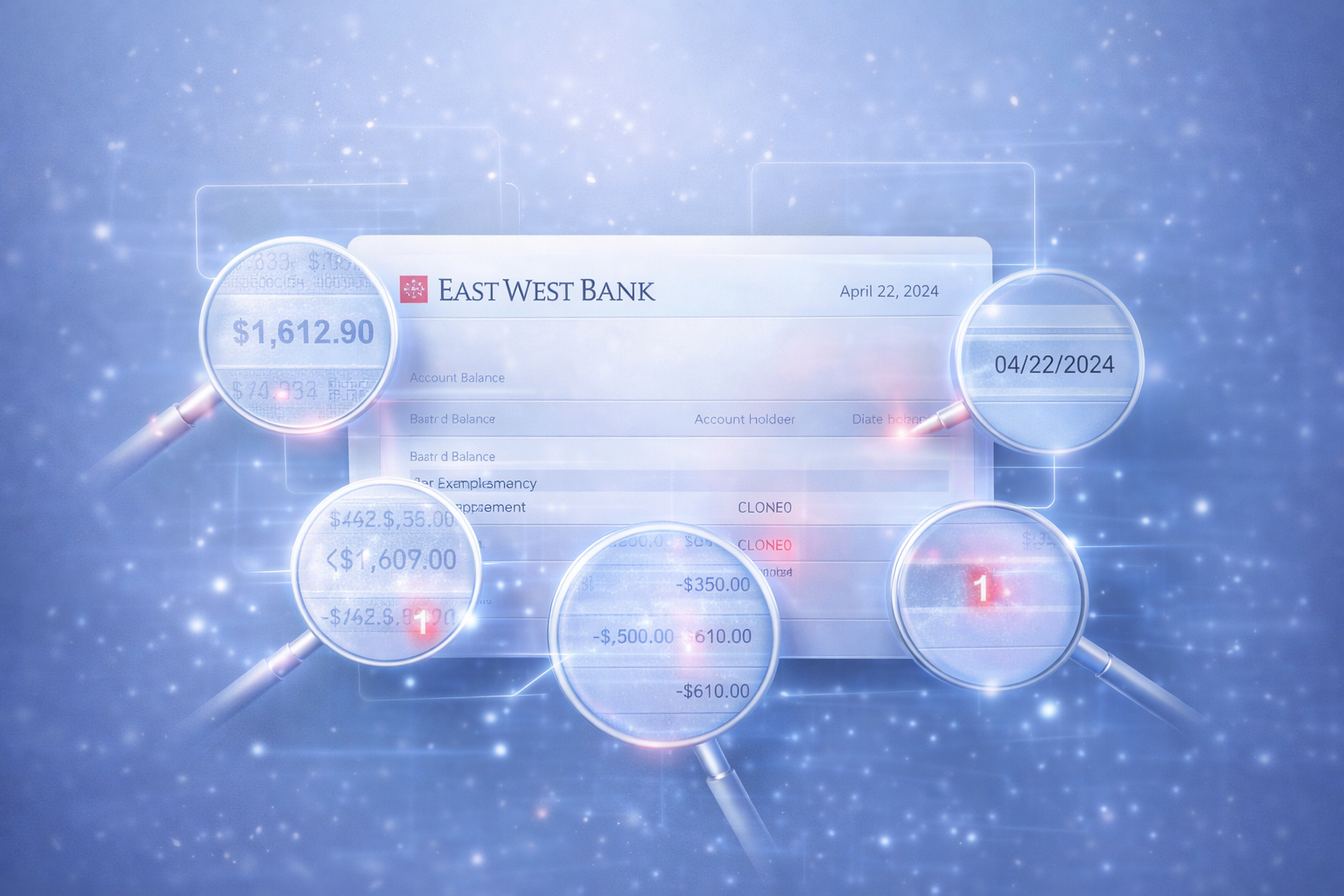
AI generated bank statement fraud is increasing and difficult to detect with traditional methods as humans often miss these cases, but fake documents still leave traces in pixels metadata calculations and patterns which advanced AI systems can analyze in real time to detect fraud more accurately

Read more
Beyond OCR: Why Traditional Document Extraction Fails at Fraud Detection

Beyond OCR: Why Traditional Document Extraction Fails at Fraud Detection

Document fraud is rising rapidly and traditional OCR cannot detect it because it only reads text and does not verify authenticity. Fraudsters exploit this gap using cheap AI tools while humans struggle to catch sophisticated forgeries. Modern solutions like Clox ai use multi layer AI analysis to detect fraud in real time and support faster more accurate decision making

Read more

The Rise of Generative AI in Pay Stub Forgery: How to Detect Pixel-Level Anomalies

Generative AI has made forged pay stubs nearly indistinguishable from authentic ones. Legacy detection can't keep up. Here's what lenders need to know.

Read more
Digital Fingerprints: What a File's Metadata Reveals About Fraud (That the Eye Misses)

Digital Fingerprints: What a File's Metadata Reveals About Fraud (That the Eye Misses)

AI can now generate bank statements, driving licenses, and tax documents that fool the human eye. But their metadata tells a completely different story.

Read more
Fraud at the Speed of AI: Why Real-Time Detection Is No Longer Optional

Fraud at the Speed of AI: Why Real-Time Detection Is No Longer Optional

Fraudsters are using generative AI to produce documents faster than humans can review them. Here's why your detection needs to be faster than their fabrication.

Read more
From Photoshop to GPT: How Document Fraud Evolved in 5 Years

From Photoshop to GPT: How Document Fraud Evolved in 5 Years

Document fraud has shifted from manual Photoshop edits to fast, AI-generated forgeries that evade traditional detection systems. To stay ahead, organizations now need layered, AI-driven defenses that combine forensic, structural, content, and behavioral analysis.

Read more
Document Fraud: The $40 Billion Blind Spot in Your Risk Strategy

Document Fraud: The $40 Billion Blind Spot in Your Risk Strategy

Document fraud involves creating or altering documents to gain money, services, or access unlawfully. It commonly occurs in processes that rely heavily on document trust, such as bank account opening, loan and credit applications, government subsidies, insurance claims, and rental or tenancy verification and many more.

Read more
Zero Trust Banking: Why Your Documents Are the New Attack Surface

Zero Trust Banking: Why Your Documents Are the New Attack Surface

It’s 2026. You’ve locked down your network and user access. But, what about the files that actually move the money?

Read more
Introduction to Document Fraud

Introduction to Document Fraud

Document fraud involves creating, altering, or misusing documents to gain unauthorized access to money, services, or benefits. It commonly affects banking, loans, government services, insurance, and rentals, leading to financial losses, higher operational costs, reputational damage, and weaker risk controls for institutions.

Read more