A bank statement can look completely real, with the right font, layout, and balance, yet still be generated by AI in under 30 seconds. In 2024, digital document forgery surpassed physical counterfeits for the first time, making up 57 percent of all document fraud worldwide. This represents a 244 percent increase from 2023 and a 1,600 percent surge since 2021. However, every digital file contains hidden metadata, a digital fingerprint that AI generated documents often fail to replicate accurately.
| Stat | Value | Source |
|---|---|---|
| YoY increase in digital document forgery (2024) | 244% | Entrust 2025 Report |
| Of all fraudulent docs are bank statements | 59% | 2025 Document Fraud Report |
| Of document fraud visible to the human eye | <10% | 2023 Document Fraud Report |
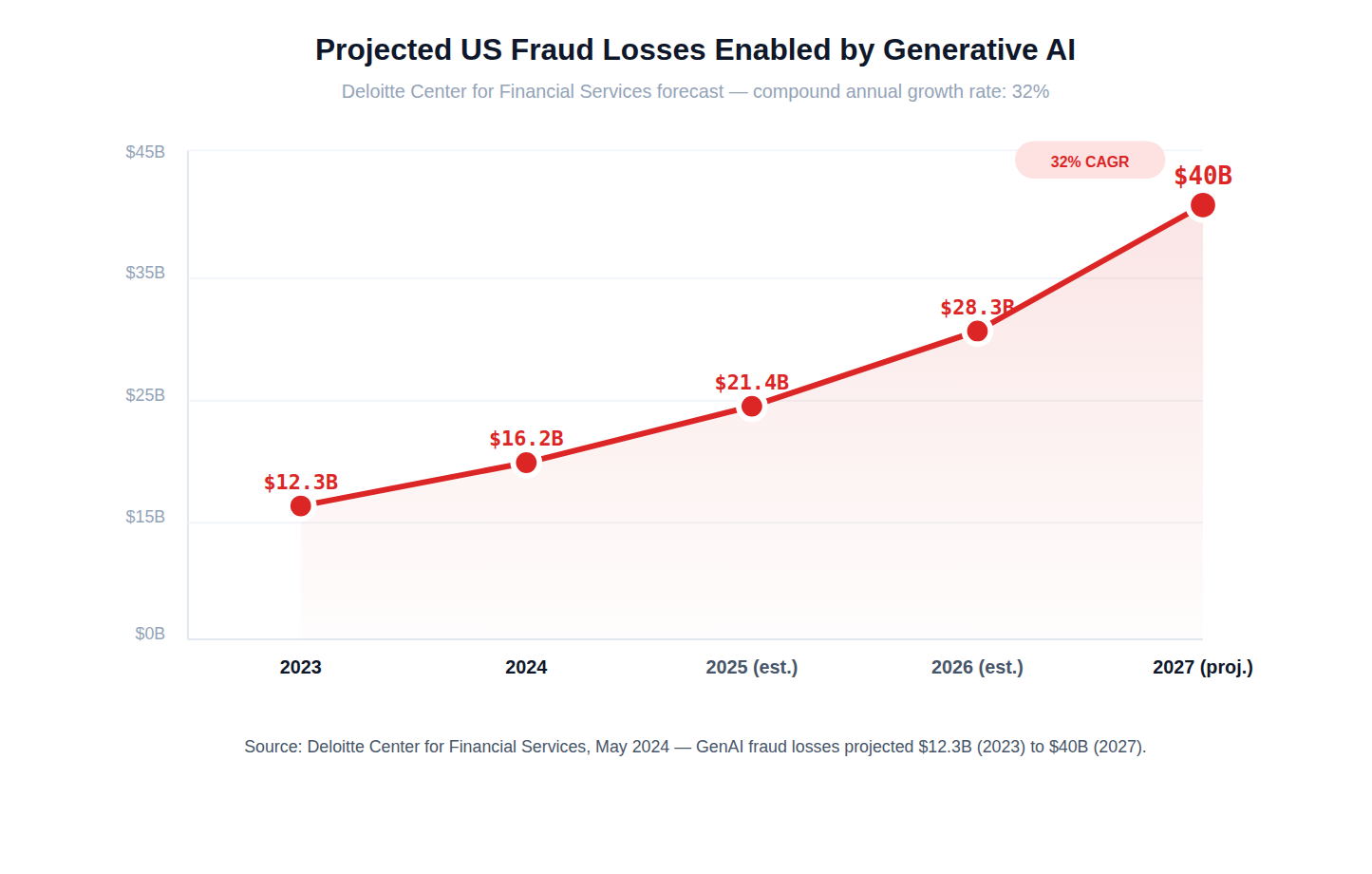
| Projected US GenAI fraud losses by 2027 | $40B | Deloitte Center for FS |
AI Makes Forgery Easy — Metadata Makes It Detectable
Generative AI has made document fraud easier than ever, enabling the creation of highly realistic fake financial and identity documents. Fraud cases have increased rapidly in recent years, with synthetic identities and manipulated templates becoming more common. While these documents can easily deceive human reviewers, hidden metadata inconsistencies often reveal that they are not genuine.
Genuine vs. AI-Generated: The Metadata Difference
While AI-generated documents can replicate the look of a legitimate file, they fail at the metadata layer. Modern document forensics checks previous document versions, inconsistent fonts, and the software used to create or alter the document signals invisible to the human eye but telltale for AI analysis.
✅ Genuine Document
- Author: Institutional system (e.g. "DMV Export v4.2")
- Producer: Banking / government software
- Timestamps: Align with document date & business hours
- Revisions: 0–1 (single system export)
- Fonts: Proprietary institutional typefaces
🚨 AI-Generated Document
- Author: Blank, generic ("User"), or AI tool name
- Producer: Photoshop, Canva, Chrome, or LLM renderer
- Timestamps: Mismatch — often created minutes ago
- Revisions: Multiple edits on a "system-generated" file
- Fonts: Generic web fonts (Arial, Helvetica)
Most Targeted Document Types
Not all documents are targeted equally. A 2025 industry analysis of millions of documents reveals that bank statements are by far the most commonly forged — accounting for 59% of all fraudulent documents detected — followed by payslips (11.7%) and utility bills (10.2%). The Entrust report found that globally, India Tax ID was the single most targeted document (27%), followed by identity cards from Pakistan and Bangladesh.
| Document | Share of Fraud | Key Detail |
|---|---|---|
| 🏦 Bank Statements | 59% | Most targeted by AI forgery tools |
| 💰 Pay Stubs / Payslips | 11.7% | Easy to fabricate with online templates |
| 📄 Utility Bills | 10.2% | Used for address and identity proofing |
| 🧾 Tax Documents | 27%* | India Tax ID: most targeted globally |
| 🪪 Identity Cards / DL | 18%* | Top 3 most targeted documents globally |
| 🛡️ Insurance & Other | ~9% | Rich XMP metadata hard for AI to replicate |
Bank statements = 59% of all fraudulent docs (2025 Document Fraud Report). Tax ID and identity card figures are global targeting rates from Entrust. Percentages reflect different measurement scopes.
The Scale of the Problem
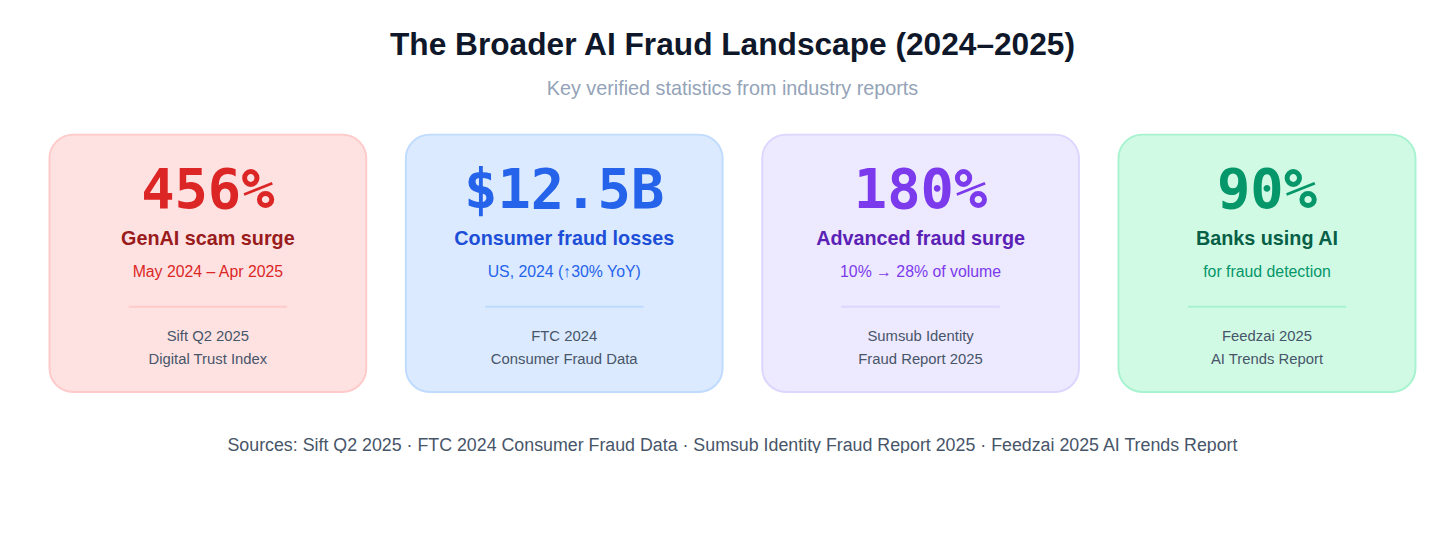
GenAI-enabled scams rose 456% between May 2024 and April 2025, according to Sift's Q2 2025 Digital Trust Index. The FTC received 2.6 million fraud reports from consumers in 2024, with total losses reaching $12.5 billion — a 30% increase over 2023. And fraud involving advanced AI techniques surged 180% year-over-year, growing from 10% to 28% of overall fraud volume, per Sumsub's 2025 findings.
Why Metadata Analysis Wins
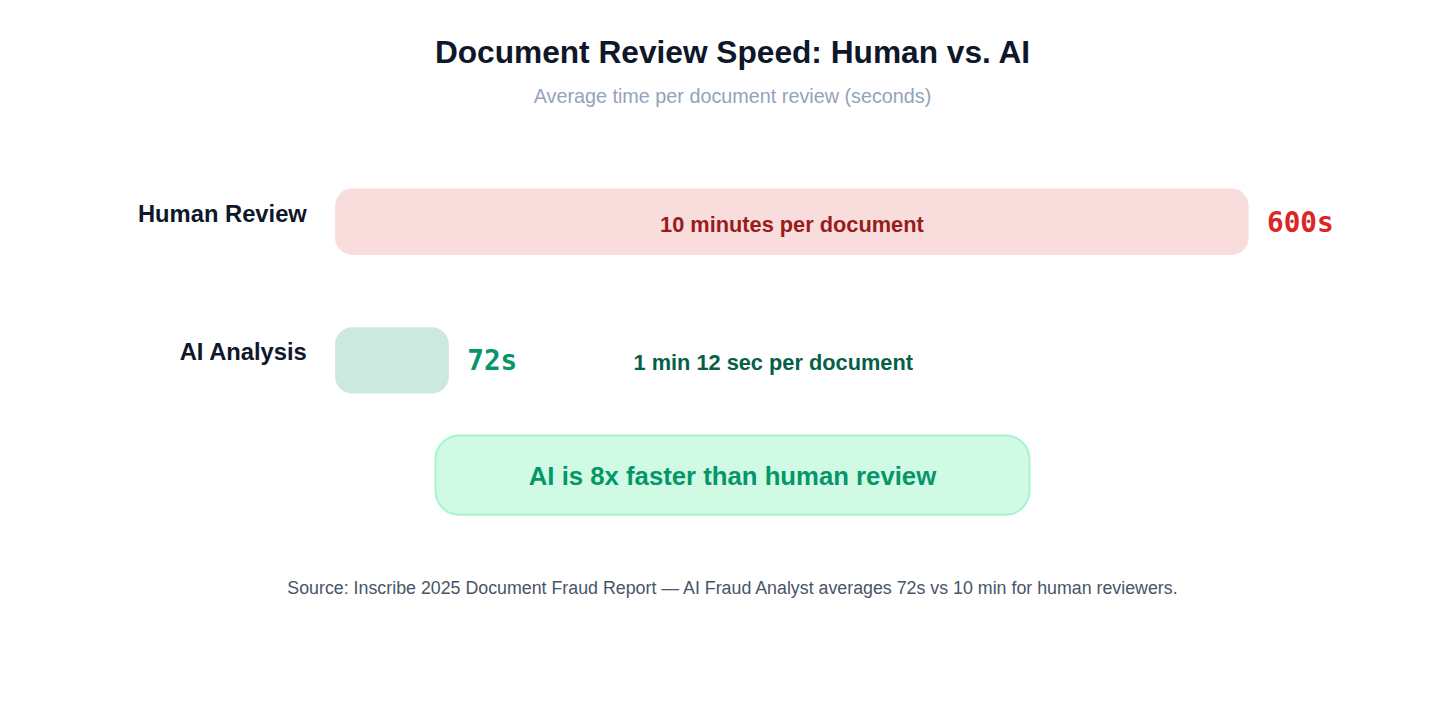
The speed advantage of AI-powered metadata analysis is dramatic. Leading AI fraud analysts average just 72 seconds per document review, compared to an average of 10 minutes for human reviewers — an 8x speed improvement while catching fraud signals invisible to the naked eye.
The need is clear: over 50% of fraud incidents now involve AI and deepfakes (Feedzai 2025). Deepfake attacks occurred at a rate of one every five minutes in 2024 (Entrust). And 9 in 10 banks are already using AI to detect fraud, with two-thirds having integrated AI within the past two years (Feedzai).
Red Flags by Document Type
| Document | Key Metadata Red Flag | Risk |
|---|---|---|
| 🏦 Bank Statement | PDF producer ≠ banking software; timestamp mismatch with statement period | 🔴 Critical |
| 💰 Pay Stub | Revision count > 0 on what should be a payroll system export | 🔴 Critical |
| 🧾 Tax Return | Author field blank or generic; missing proprietary font set from tax software | 🟠 High |
| 🪪 Driving License | Software field shows image editor or AI renderer instead of DMV system | 🔴 Critical |
| 🛂 Identity Card | EXIF inconsistencies; uniform noise pattern in scanned images | 🔴 Critical |
| 📄 Utility Bill | Missing XMP metadata that utility companies embed automatically | 🟠 High |
⚠️ A document with scrubbed or missing metadata is just as suspicious as contradictory metadata. Legitimate institutional documents always carry rich, consistent metadata. The absence of that fingerprint is itself a red flag.
At CLOX.AI, we solve the challenge of AI versus non AI image classification by analyzing the forensic signals hidden beneath the surface of every file. Rather than relying only on visual appearance, our system examines structural patterns, metadata, compression artifacts, and generation signatures to determine whether an image was created by artificial intelligence or captured through authentic sources. This enables organizations to detect synthetic and manipulated images in real time, strengthening trust and preventing AI driven fraud.
Still Reviewing Documents Manually?
See what metadata fraud signals your current process is missing.
Upload a document and get a real time forensic analysis in seconds, not minutes.