From Photoshop to GPT: How Document Fraud Evolved in 5 Years
The tools have changed. The stakes have exploded. And most detection systems haven't caught up.
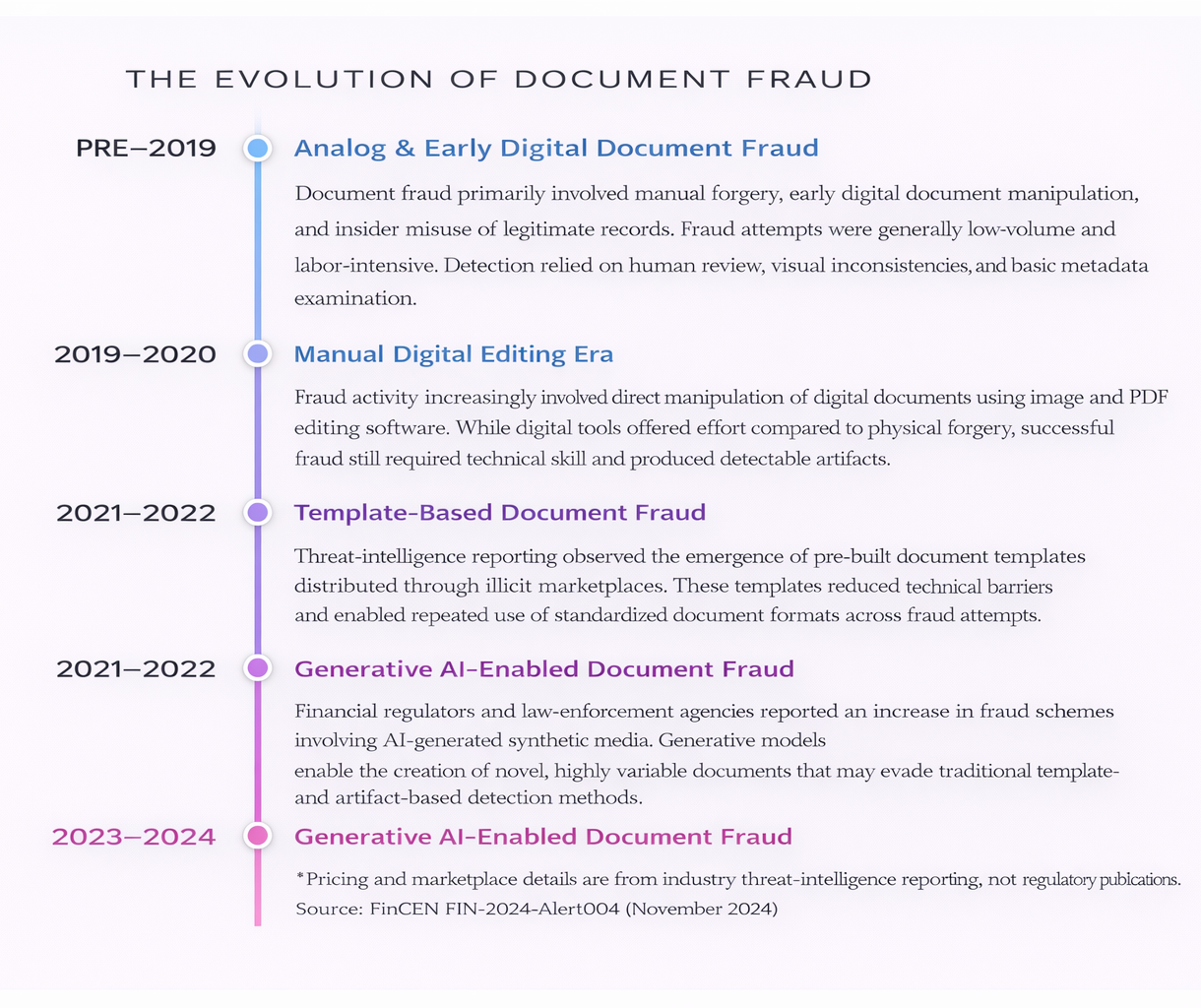
Five years ago, creating a convincing fake bank statement required real skill. It relied on traditional image-editing tools such as Photoshop, GIMP, Illustrator, and even PDF editors. Forgers had to manually match fonts, align columns, adjust spacing, and recreate authentic layouts line by line. The process was slow, error-prone, and demanded patience and precision. Despite the effort, most forgeries were still caught, because small human mistakes almost always slipped through..
That barrier to entry is gone.
Today, generative AI tools can produce a fabricated bank statement in seconds. No design skills. No typography knowledge. Just a prompt. The democratization of document fraud isn't coming, it's already here.
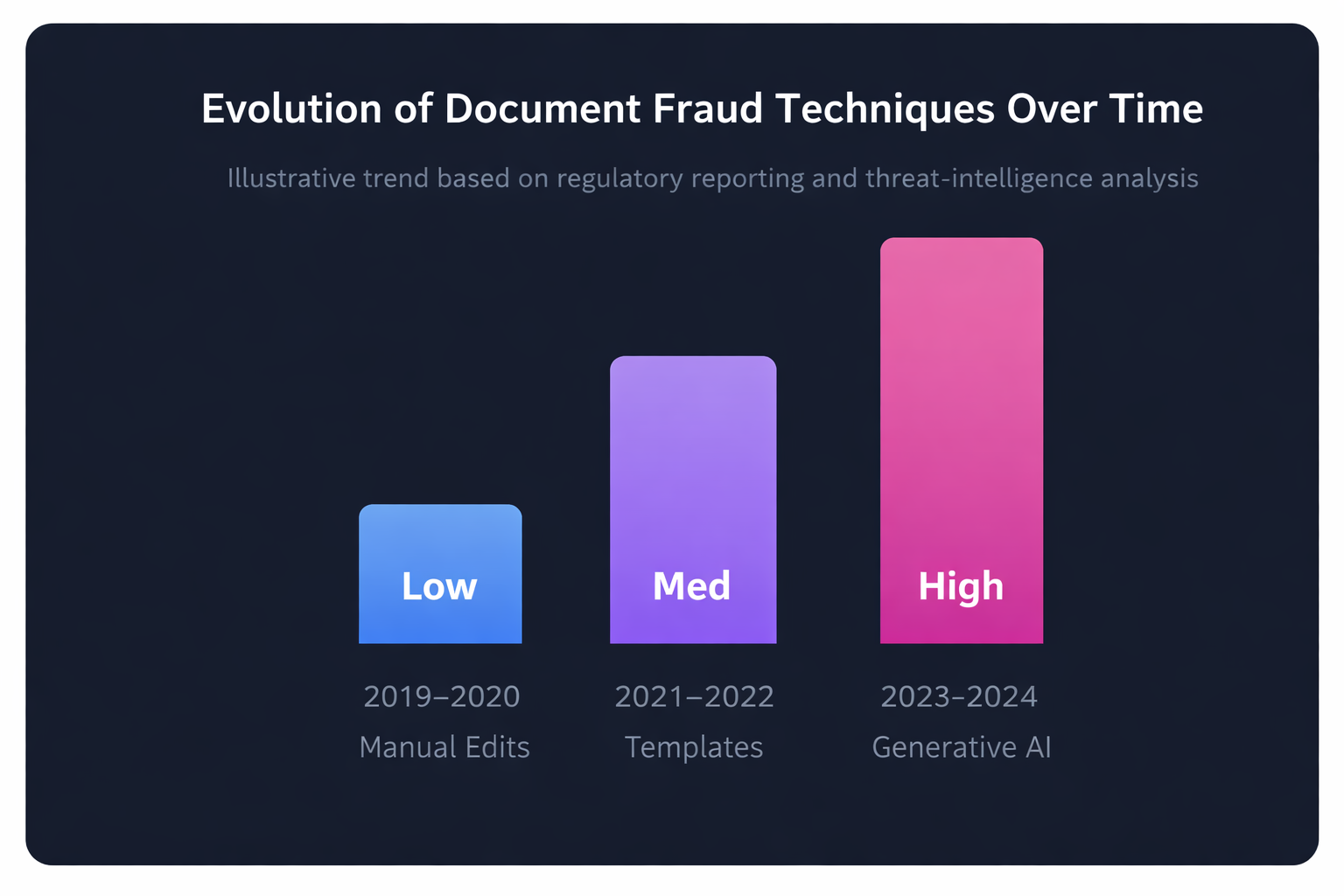
2019–2020: The Photoshop Era
In the early days, document tampering followed a predictable pattern. Fraudsters would obtain a legitimate document and manually alter key fields, change the balance, inflate the salary, adjust the dates.
The tools of choice were image editors: Adobe Photoshop, GIMP, or PDF editors for direct text manipulation. Detection was relatively straightforward for trained reviewers.
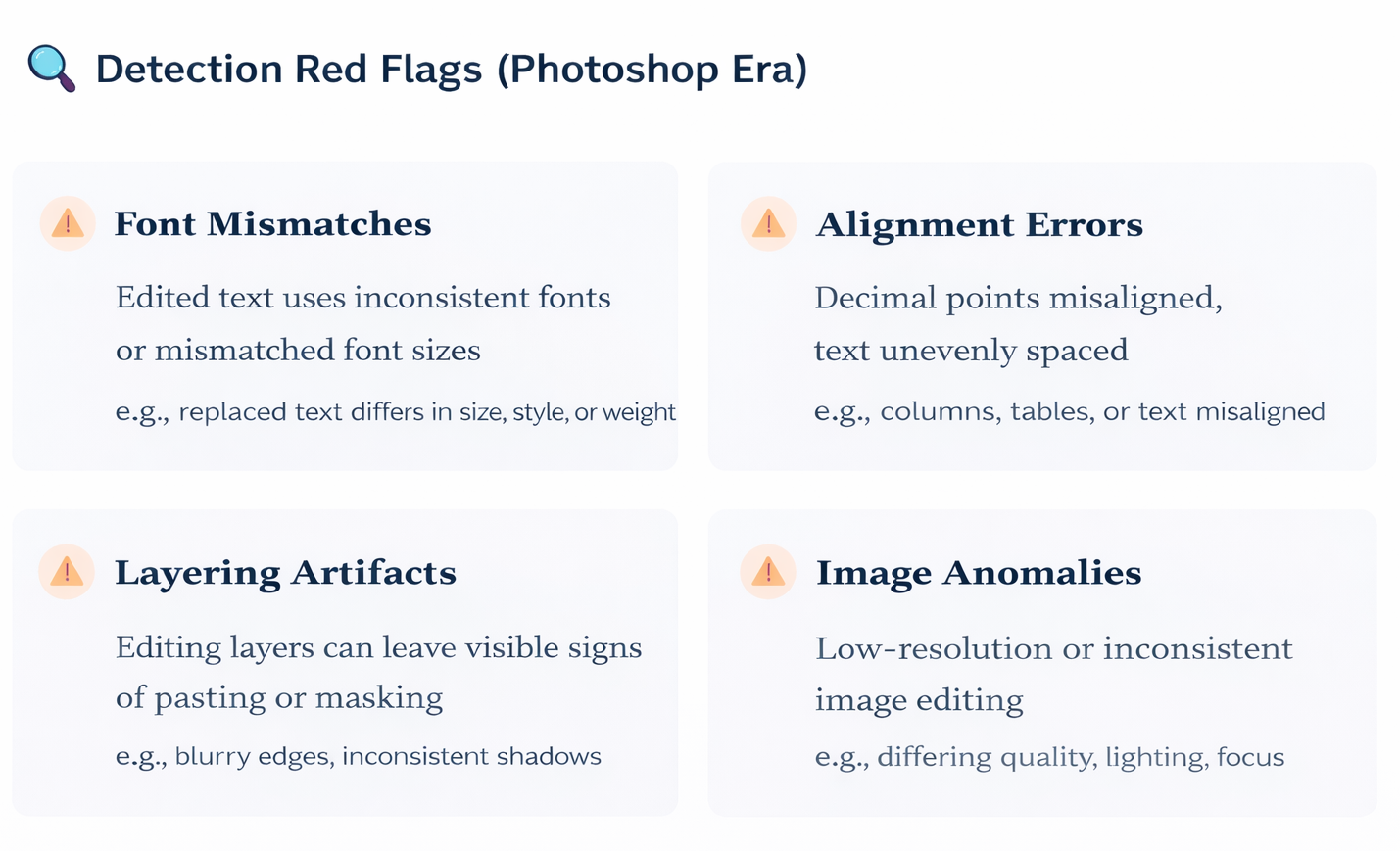
The fraud-to-detection ratio favored defenders. Manual review caught most attempts. The barrier to creating a convincing fake was high enough that volume stayed manageable.
2021–2022: Templates and the Dark Web
Then the market industrialized.
Dark web marketplaces started selling ready-made document templates built specifically for fraud. For as little as $15–50, anyone could buy a realistic bank statement template complete with authentic logos, fonts, and perfectly aligned fields, making fake documents easy to create and hard to spot.
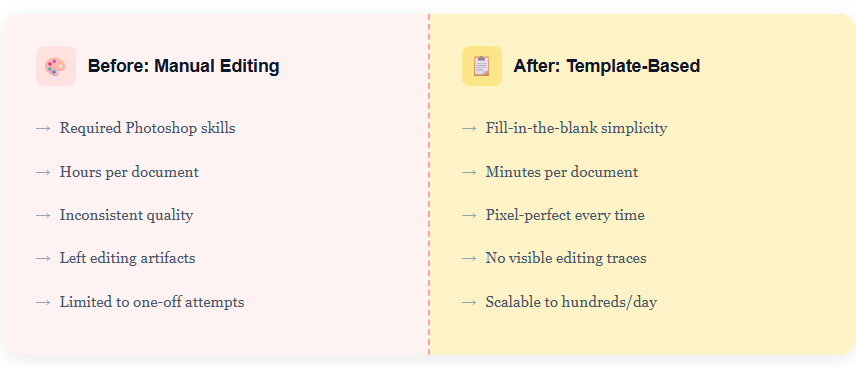
This shift fundamentally changed the economics. Detection systems that relied on spotting formatting errors began to fail because the formatting was perfect. What varied was the content.
Key Insight:
Metadata analysis became critical. Even pixel-perfect documents revealed creation timestamps, software signatures, and identical file structures across unrelated applications, which were clear signs of template reuse.
2023–2024: Enter Generative AI
The release of advanced generative AI tools marked an inflection point the industry is still grappling with.
"Create a Chase bank statement for January 2024 showing a checking account balance of $45,000 with regular bi-weekly deposits of $4,200."
The output isn’t perfect, but it doesn’t need to be. It only needs to pass initial review, and generative AI clears that bar with disturbing ease.
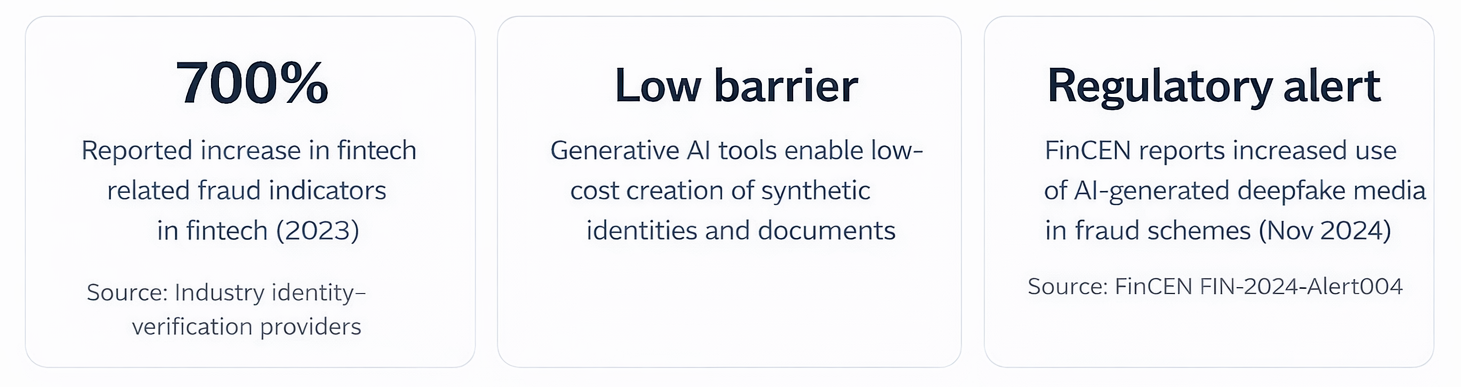
⚠️ FinCEN Alert (Nov 2024)
Financial institutions reported a significant spike in AI-generated deepfake documents used to bypass identity verification.
Why AI-Generated Documents Are Different
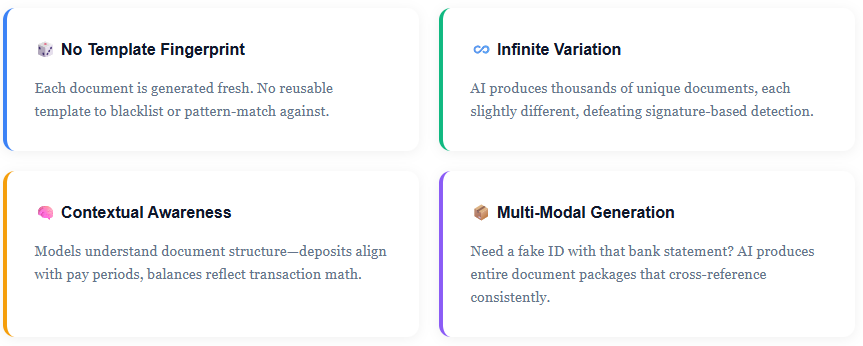
The Detection Gap
Here's the uncomfortable truth: most fraud detection systems deployed today were designed for the Photoshop era. They look for pixel-level inconsistencies that AI-generated images don't have, known template signatures that don't exist for novel outputs, and font mismatches that generative AI handles natively.
Modern document forensics requires a different approach, one that combines multiple detection layers:
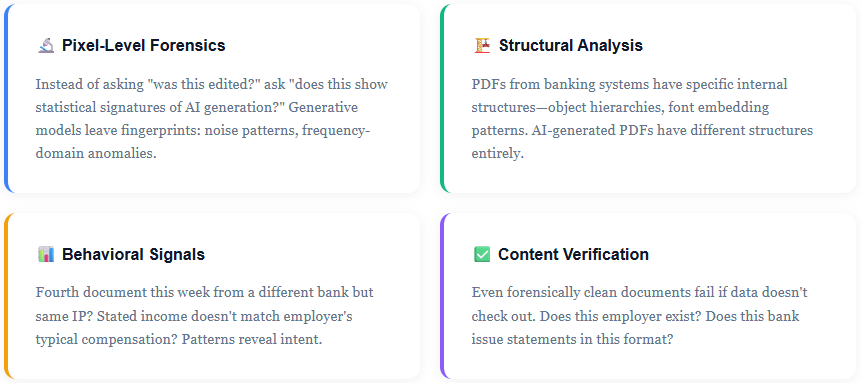
Defense in Depth:
No single layer is sufficient. Effective detection combines visual, structural, metadata, content, and behavioral checks.
What Comes Next
The trajectory is clear: document fraud is becoming easier to commit and harder to detect. The tools available to fraudsters are improving faster than those available to defenders.
But the picture isn't entirely bleak. The same AI capabilities that enable fraud generation also enable fraud detection. The institutions that will weather this transition are those that:
- Layer defenses — no single check catches everything
- Assume documents are hostile — verify by default
- Automate intelligently — human review doesn’t scale
- Stay current — detection must continuously evolve
The Photoshop era rewarded attention to detail. The GPT era rewards architectural thinking by building systems that remain robust even as specific attack techniques change.
The fraudsters have upgraded their tools, now it’s time for everyone else to catch up.
Learn how Clox AI is helping organizations stay ahead with AI-powered document fraud detection.
Contact Us for more details.